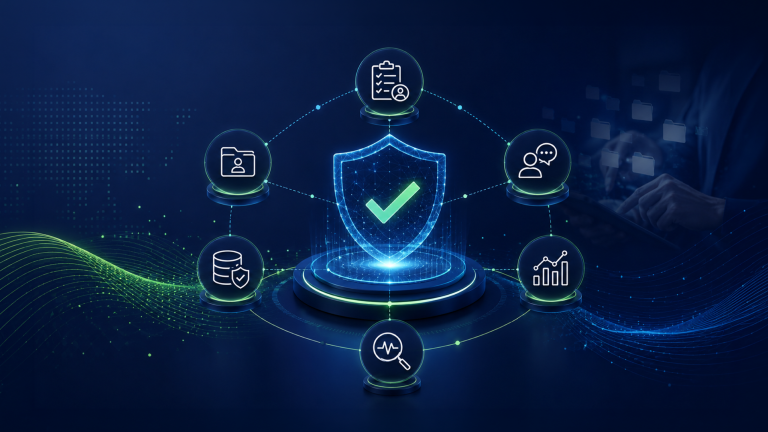
Care management is not new, and neither is AI in care management. What is changing is the number of places where AI can enter daily work: before outreach begins, during a member conversation, inside a case queue, and across a population. This article examines five roles: risk modeling, conversational support, workflow monitoring, recommendations and routing, and population analytics. They can support more individualized care pathways when their outputs reach trusted data, existing workflows, human review, and accountable owners.
Machine learning can sort a large caseload into a smaller set that merits attention. It learns patterns from historical data and applies them to new records. A score may help prioritize outreach or review, but a care manager needs context before acting. Teams need to know which data informed the score, how current it is, what action it should trigger, and who owns that action. A risk list with no owner is just another queue.
Natural language processing helps software interpret and produce everyday language. In care management, it can support conversations and capture details that do not fit a structured field. The information has to reach the case record, the appropriate team, and the next work step. ThoughtFocus documents TFGPT Engage as an AI-powered conversational agent. It illustrates the kind of component a connected approach can include. The payer still has to define when human follow-up is needed and how conversational context is retained.
AI agents can watch operational conditions in real time: a case waiting too long, a task stuck after a status change, or a queue swelling faster than staffing can absorb it. Their job is to bring an exception to the right person’s attention before it becomes a service failure. The design work sits in the rules. Teams must agree on which conditions deserve escalation, who receives it, and what happens when an alert is wrong or incomplete. Monitoring without response ownership becomes expensive background noise.
AI can assemble relevant evidence and suggest a next step or destination. A useful recommendation shows its basis: the record reviewed, the applicable policy or care-plan information, and the reason for the route. Human review matters when the record is incomplete, the case falls outside expected patterns, or the recommendation could influence a clinically significant decision. Clinical decision support systems may be part of the broader architecture for some uses. They need their own clinical validation, accountability, and review process. Fast routing that cannot be inspected will not earn trust from the people asked to use it.
Population analytics widens the lens. It can show where similar needs are clustering, which groups are missing planned touchpoints, or where capacity does not match demand. Care teams can use those patterns as a starting point for individualized care pathways, alongside the person’s current circumstances and professional judgment. Disconnected tools show their limits here. A population view cannot help if it never changes caseload assignment or care-plan review.
A risk score and a conversation summary should draw from shared, governed data. An alert should enter an existing queue with a named owner. A recommendation should leave an audit trail that a reviewer can inspect. Governance covers data quality, privacy, access, model oversight, and accountability for changes. APIs and FHIR can matter in the broader architecture when systems exchange data. They are implementation considerations, and they do not settle who owns the work.
ThoughtFocus brings capabilities relevant to the work behind this model. Its Data & Analytics materials describe unified data platforms, real-time analytics, advanced analytics for risk, fraud, and personalization, along with data governance and privacy. It also describes governed data foundations designed to power precise analytics and responsible AI.
Explore ThoughtFocus’s healthcare capabilities to assess the enabling work described here.