For Chief Data Officers and Business Unit Leads in Private Equity, the goal is to stop the data team from functioning as a “Report Factory.”
While reporting is only a subset of the data team’s broader mandate, it often consumes a disproportionate amount of their bandwidth. In most firms, senior analysts are buried under repetitive requests for basic performance updates, leaving little room for the strategic modeling and AI initiatives that actually drive the investment thesis. To scale the firm’s data capabilities without a linear increase in headcount, teams must move from Ticket-Based Reporting to a Self-Service Model.
In the traditional model, the data team acts as a gatekeeper. When a Deal Team or Operations Lead needs a specific cut of data, like a breakdown of churn by region across three new acquisitions, they submit a ticket. Since the data team is also balancing infrastructure and security, these “quick asks” sit in a backlog.
By the time a report is manually cleaned and delivered, the window for proactive decision-making has often closed. This delay creates a culture of Shadow IT, where frustrated business users build their own un-governed “mini-databases” in Excel. The cost is highest during time-sensitive activities such as deal analysis, quarterly closes, and LP reporting cycles, where stale data can directly impact decisions.
Bridging the gap between raw data and actionable insight requires a specialized architecture. This is where DataFocus by ThoughtFocus comes in. DataFocus is a production-proven enterprise analytics platform designed to transition your data team from “report builders” to “product owners.” Instead of spending their days fulfilling one-off tickets, the team uses DataFocus to build Data Products. These are reusable, governed datasets housed in a central FocusLake.
Reclaiming Bandwidth: By providing a library of pre-validated data, such as Standardized Portfolio EBITDA or Consolidated Headcount, business users can generate their own insights in minutes. This removes the “manual tax” of routine reporting from the technical team.
Guardrail-Based Access: Self-service does not mean un-governed. DataFocus utilizes SOC2-compliant access controls to ensure that a Sales Lead only sees data relevant to their mandate while the CFO maintains a fund-level view.
Unified Semantic Layer: Because every self-service report pulls from the same FocusLake, the board no longer wastes time debating whose “Revenue” number is correct. The definitions are locked at the architectural level.
The return on investment for a self-service model is not just about saving time; it is about Redeploying Talent. When your senior data architects are not spending forty hours a week on “SQL-on-demand” for the Deal Team or the Investor Relations group, they can focus on high-alpha activities:
Predictive Modeling: Identifying which PortCos are likely to miss their targets sixty days before it happens.
AI Integration: Building the RAG (Retrieval-Augmented Generation) pipelines that will power your firm’s proprietary AI tools.
Data Diligence: Improving the quality of data assessments during the acquisition phase to avoid inheriting Integration Debt.
In Private Equity and Capital Markets, the firm that can identify an operational trend and act on it in 30 minutes has a massive advantage over the firm that has to wait days for a PDF.
Moving to a self-service model isn’t just a technical upgrade; it’s an operational shift that turns data from a cost centre into a strategic engine.
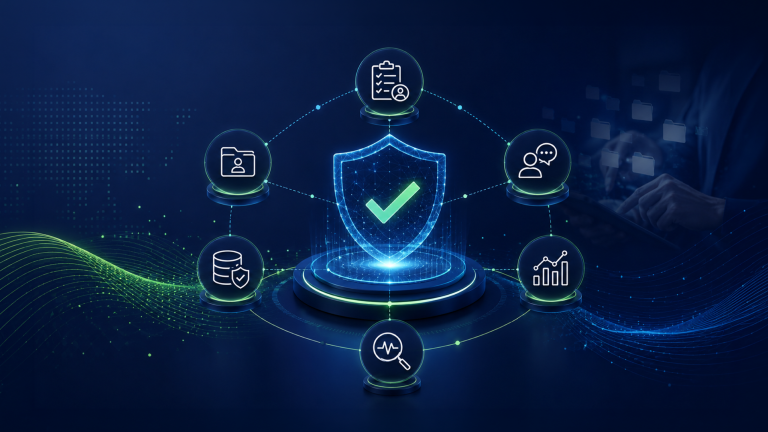
Self-Service Dashboarding: A user-friendly interface that allows non-technical leads to query the FocusLake without writing code.
Pre-Built Data Products: Standardized schemas for common PE and Capital Markets metrics, ready for immediate use.
Automated Audit Trails: Full transparency into data access and usage, ensuring compliance without manual oversight.
Are you ready to stop being a report factory?
Schedule an Operational Review to see how DataFocus can automate 80% of your reporting workload.